How to Choose an Oilfield Vacuum Degasser
The main thing to get right when choosing a vacuum degasser is the required mud flow. Motor power and model numbers help when you compare two units, but neither one tells you whether the unit can keep up with your mud system.
Once the flow number is settled, the comparison comes down to vacuum performance, mud properties, installation space, and electrical requirements. Those decide which quotation is usable.
Choose the Right Capacity
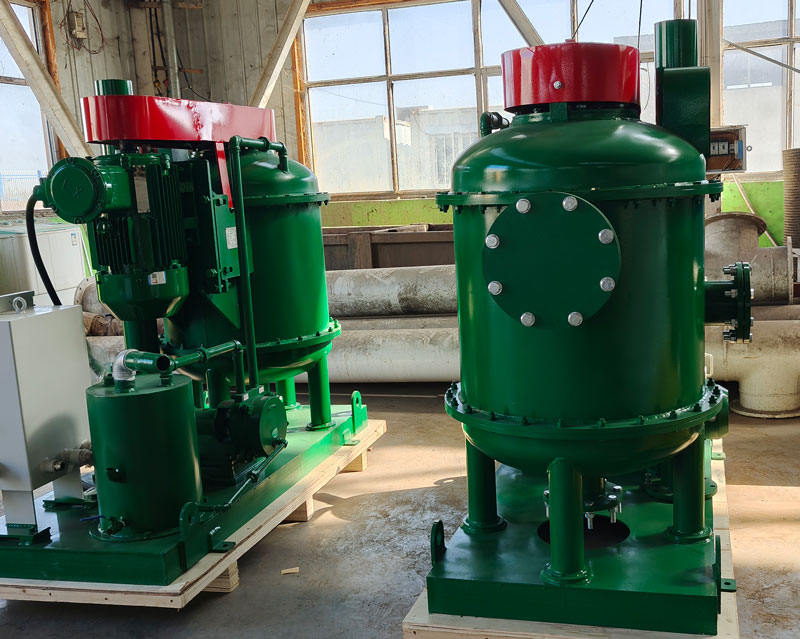
Size from the maximum mud flow rate, not the normal circulation rate. The degasser needs enough rated capacity for the highest flow the mud system will see.
If normal circulation is 250 m³/h and peak flow reaches 280 m³/h, a 240 m³/h unit is undersized and a 270 m³/h one still falls short of the peak. The next size worth pricing is 300 m³/h.
The degasser also has to sit inside the flow of the rest of the solids control equipment: shale shaker, mud tanks, desander, desilter, centrifuge, pumps, and the connecting lines.
Check Vacuum Performance and Degassing Efficiency
After capacity, the two numbers to compare are vacuum range and rated degassing efficiency. Ask for figures. A unit described as "high efficiency" with no number behind it is not a specification. Vacuum pump type and power belong in the same comparison, since they are part of the vacuum system.
TR's TRZCQ series carries a rated degassing efficiency of ≥95%, with a vacuum range given for each model. Read those figures against your own mud flow and the operating conditions the manufacturer states.
Match the Degasser to the Mud and Feed Conditions
Mud properties carry more weight when the fluid is heavy, highly viscous, or carrying a high solids load. Give the supplier the mud density, viscosity or rheology, solids loading, mud type, and expected gas-cut condition. Say whether the project runs WBM, OBM, or SBM. The more of this you hand over, the faster a supplier can tell you whether a given model fits.
On a self-priming unit, the feed side needs checking too: suction line, tank level, piping layout, and the elevation difference between the mud tank and the degasser.
Check Installation and Electrical Requirements
A vacuum degasser has to fit both the process layout and the available space. A common solids control arrangement is:
Shale shaker → vacuum degasser → desander → desilter → decanter centrifuge
Layouts vary from rig to rig, so check what sits upstream and downstream of the degasser as well as the flow direction.
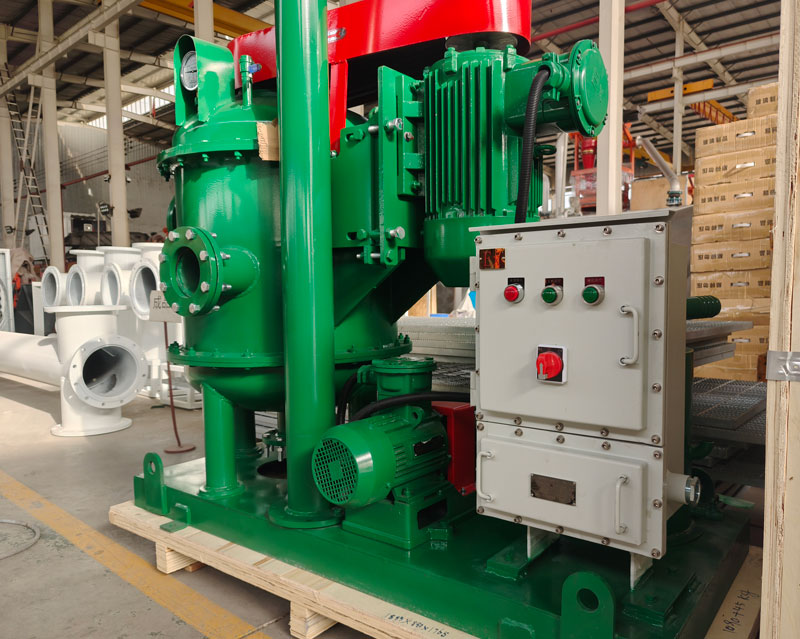
Before ordering, confirm the overall dimensions, weight, mounting points, inlet and outlet positions, gas outlet, and maintenance clearance. If the unit replaces existing equipment, compare these against what is installed now.
Settle the electrical requirements before production. The quotation should state voltage, frequency, phase, motor configuration, hazardous-area classification, explosion-proof requirements, and certification. For international projects, send those electrical and hazardous-area specifications with the RFQ instead of assuming a standard motor configuration suits the site.
What to Include in the RFQ
You don't need a full specification sheet to start a selection. What a supplier needs is the operating and installation information that changes the answer:
- Normal and maximum mud flow rate
- Mud type and basic properties
- Expected gas-cut condition
- Required degasser capacity and vacuum specification, if already known
- Main motor and vacuum pump requirements, if specified
- Voltage, frequency, and phase
- Hazardous-area and certification requirements
- Available installation space and connection details
For a replacement unit, add the existing model or nameplate data, dimensions, inlet and outlet details, electrical information, and a few site photos.
Price is one line of a quotation. The rest of the lines decide whether the unit works on your rig: rated capacity, vacuum range, degassing efficiency, motor and vacuum pump configuration, electrical requirements, dimensions, connections, certification, and technical documentation.
Example: 360 m³/h and 37 kW Vacuum Degasser
Motor power and processing capacity are separate specifications. In "37 kW vacuum degasser," the 37 kW refers to the main motor, not to how much mud the unit processes.
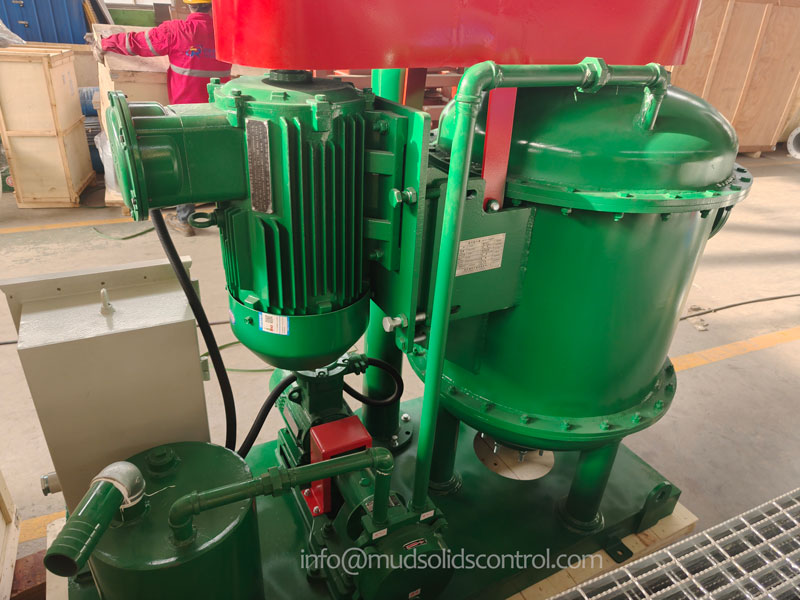
The TRZCQ360 is rated for 360 m³/h of mud flow and uses a 37 kW main motor with a 7.5 kW vacuum pump. Its rated degassing efficiency is ≥95%.
If you come across the search term "360 m³ Vacuum Degasser," read the engineering specification before assuming it matches. Capacity is a flow rate, so it should read 360 m³/h.
TR's TRZCQ range covers 240, 270, 300, and 360 m³/h, with main motor ratings from 15 to 37 kW. Mud flow picks the model; the checks above decide whether it will run on your rig.