Leave Your Message
-
Phone
-
E-mail
-
Whatsapp
-
WeChat

Engineered to withstand rigorous continuous duty in the Permian, Bakken, and Eagle Ford formations while meeting strict OSHA, ANSI, and API standards.
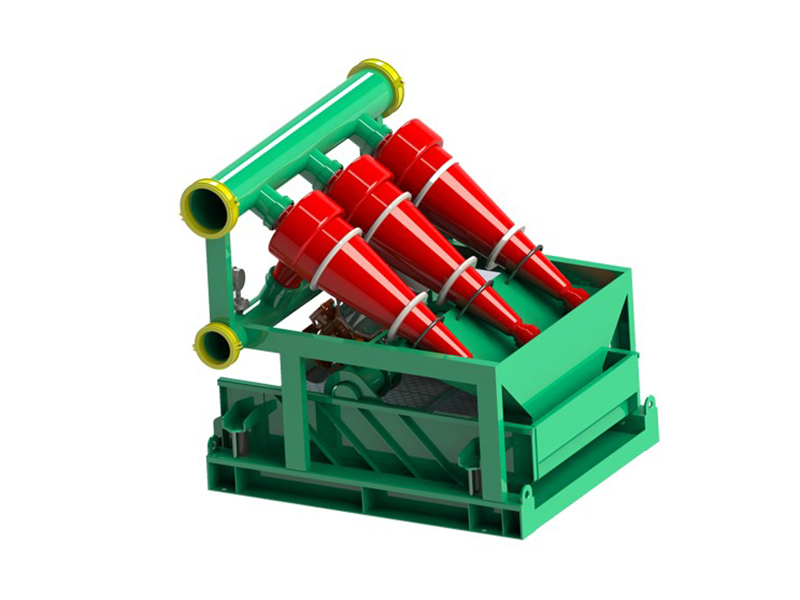
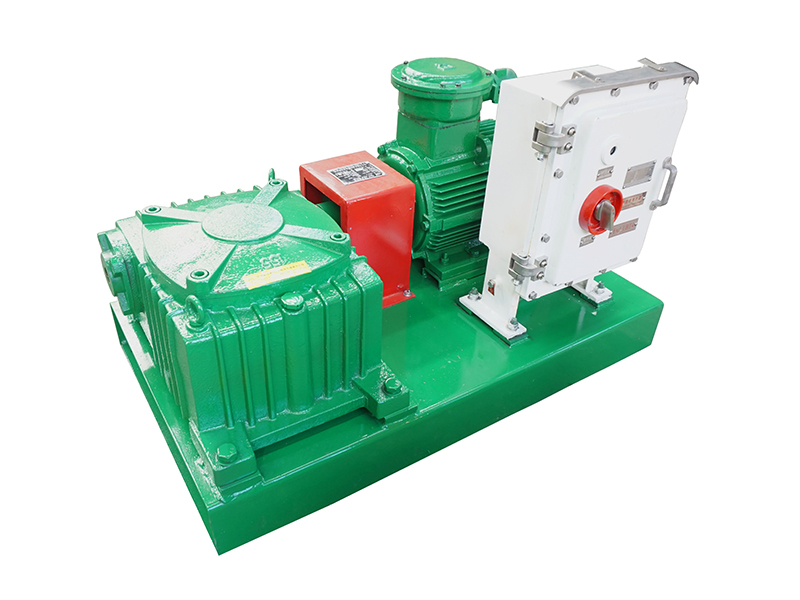
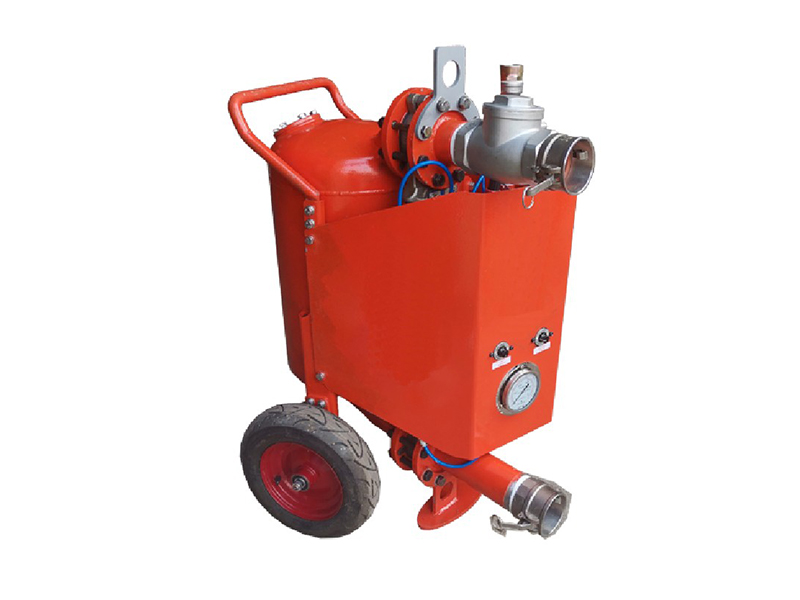
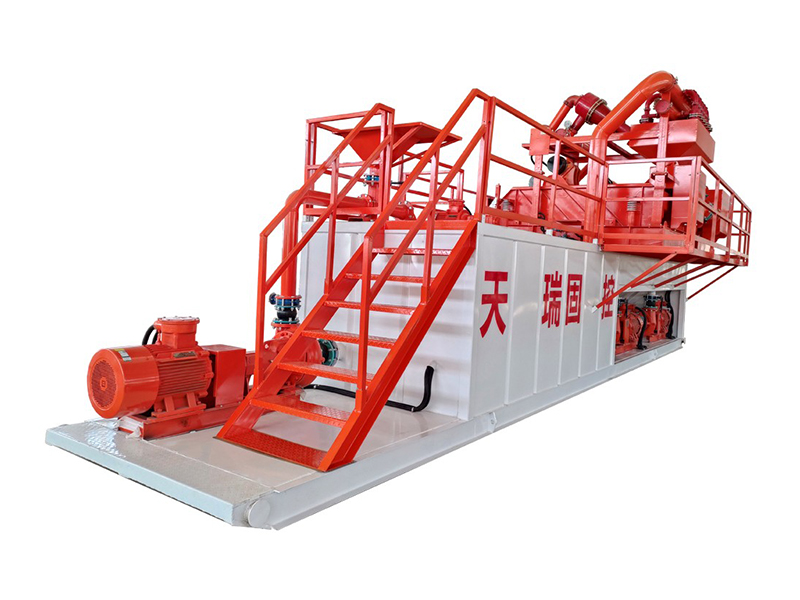
The oil, gas, and infrastructure drilling market in North America continues to push the boundaries of operational velocity, horizontal reach, and environmental accountability. In major unconventional plays such as the Permian Basin in West Texas and New Mexico, the Eagle Ford Shale, North Dakota's Bakken, and the Marcellus gas formation, horizontal lateral lengths regularly exceed 15,000 to 20,000 feet. In these extended-reach drilling (ERD) profiles, maintaining precise drilling fluid rheology, instantaneous mud weight increases, and homogeneous additive hydration is critical to mitigating non-productive time (NPT) and catastrophic downhole complications.
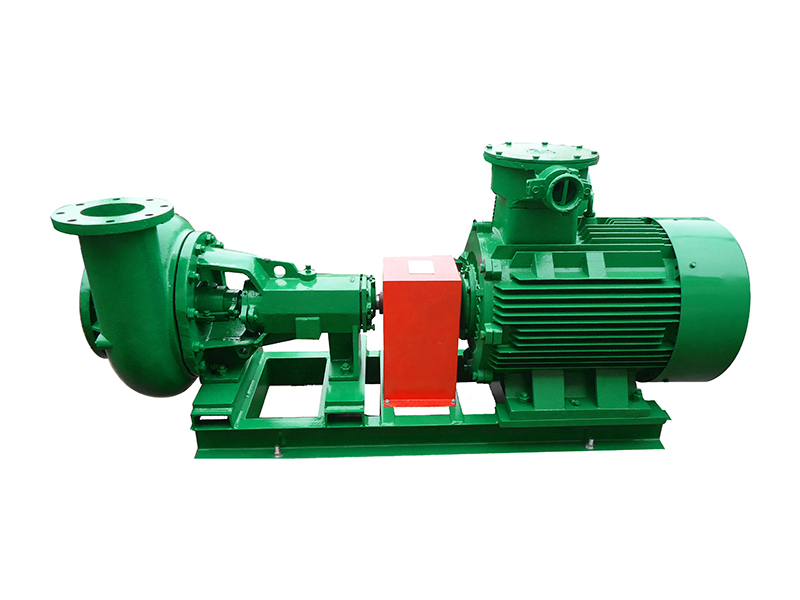
A solids control jet mixer—frequently paired as a venture hopper and centrifugal feeding pump skid—serves as the mechanical heart of any modern mud system. Conventional low-shear mixing fails to adequately disperse modern polymers, barite, and bentonite clays, creating agglomerations commonly referred to as "fish eyes." In the fast-paced American drilling landscape, where daily rig day-rates remain significant capital expenditures, drilling contractors cannot tolerate mud weight stratification or delays in polymer hydration.
Utilizes Bernoulli's principle to generate a powerful negative vacuum pressure at the throat, sucking dry bulk chemicals into the high-velocity liquid stream without clogging or backpressure blowouts.
Fabricated with wear-hardened high-chrome alloys, polyurethane-lined nozzles, and tungsten-carbide orifices to reliably withstand high-density barite slurries and abrasive mineral friction.
Engineered shearing geometry unravels coiled long-chain polymers in a single pass, accelerating molecular bonding, enhancing viscosity yield, and reducing expensive additive consumption by up to 22%.
The solids control market in the United States is experiencing an unprecedented structural transformation driven by digital integration, strict ESG (Environmental, Social, and Governance) targets, and closed-loop mud recycling mandates imposed by regulatory agencies like the Texas Railroad Commission (RRC) and the U.S. Environmental Protection Agency (EPA). As drillers strive for zero discharge on location, equipment manufacturers must meet refined engineering requirements:
TR Solids Control equipment and jet mixing assemblies are custom-configured to accommodate distinctive geological characteristics and drilling methodologies across North America:
From the high-pressure Delaware Basin to the abrasive sands of the Williston Basin, our jet mixers manage heavy weighting materials up to 18.0 ppg (specific gravity 2.16), preventing barite sag during dynamic circulating cycles.
Major pipeline projects, municipal water lines, and 5G fiber installations in urban hubs (Texas, California, Florida) rely on our compact mud recycling systems and jet hoppers to rapidly prepare high-yield bentonite slurries under tight spatial constraints.
Active geothermal plays in Nevada, Utah, and California require thermally-stable drilling fluid additives. Our high-shear jet mixers homogenize temperature-resistant chemical formulations capable of withstanding bottomhole conditions above 400°F.
Compare standard configurations manufactured to serve standard American oilfield, industrial, and HDD operational flow rates:
| Model / Series | Capacity (GPM / m³/h) | Inlet Pressure (PSI / MPa) | Nozzle Diameter (in / mm) | Hopper Sizing | Typical U.S. Applications |
|---|---|---|---|---|---|
| TRSL Jet Mixer 150 | 660 GPM (150 m³/h) | 43 - 65 PSI (0.3 - 0.45 MPa) | 2.0" (50 mm) | 600 mm Dual Valve | High-capacity shale drilling (Permian / Eagle Ford) |
| TRSL Jet Mixer 120 | 528 GPM (120 m³/h) | 40 - 60 PSI (0.28 - 0.4 MPa) | 1.75" (45 mm) | 500 mm Single Valve | Mid-depth gas plays & Heavy trenchless HDD rigs |
| TRSL Jet Mixer 80 | 350 GPM (80 m³/h) | 36 - 55 PSI (0.25 - 0.38 MPa) | 1.5" (38 mm) | 500 mm Compact | Standard trenchless utility & municipal HDD boring |
| TRSL Jet Mixer 45 | 200 GPM (45 m³/h) | 30 - 50 PSI (0.2 - 0.35 MPa) | 1.25" (32 mm) | 400 mm Ultra-Compact | Environmental remediation, mining core drilling, CBM |

Addressing operational hydraulics, maintenance protocols, and equipment selection for field superintendents.
By coupling a hydrodynamic Venturi nozzle with a downstream shear chamber, the dry barite or polymer is pulled into a high-shear micro-turbulent zone. The intense kinetic energy fractures agglomerated particles instantaneously before they can form sticky, unhydrated clumps.
The system operates most efficiently when inlet discharge pressure is maintained between 40 and 60 PSI (0.28 to 0.42 MPa). Operating below 35 PSI reduces suction vacuum, while exceeding 70 PSI can cause fluid boundary separation and unnecessary motor power consumption.
Yes. All skidded systems can be specified with 460V/480V, 60Hz 3-phase explosion-proof electrical motor assemblies adhering to UL, CSA, and Class I, Division 1 / Division 2 standards to ensure seamless compliance with North American wellsite safety protocols.
Inspect the nozzle orifice and venturi throat weekly during high-density barite pumping operations. Rinse the hopper thoroughly with base fluid after polymer or caustic additions, and periodically inspect the butterfly valve seat for seal integrity.
Robust, field-proven components designed to work synchronously with our high-shear jet mixing assemblies for turnkey fluid treatment.