Leave Your Message
-
Phone
-
E-mail
-
Whatsapp
-
WeChat

When you're drilling, mud does a lot more than just carry cuttings up to the surface. It helps cool down the bit, supports the wellbore, and keeps pressure under control. But here's the thing — if circulation slows down or the system just sits idle for a while, the mud can settle. Sometimes, barite might sink, and cuttings can start piling up in low-flow spots. As a result, the properties of the mud can become pretty inconsistent from one part of the tank to another.
That's exactly where a mud agitator comes into play. Its rotating impeller keeps the fluid stirred up inside the tank, helping prevent solids from settling out. Think of it like this—"Keep the mud moving, but make sure the whole tank's being mixed properly." That’s more of a practical tip you’d hear out in the field rather than a quote from a famous expert. I didn't include a specific person's name or a direct source because, without reliable references, it’d just be guesswork. If I find a credible quote later, I can definitely add it in.
Now, not all agitators are the same. It’s not just about having the biggest motor out there. Things like the size of the tank, the density of the fluid, the design of the impeller, and how you’re actually operating all matter a lot. If you don’t install it correctly, you could end up with quiet zones—places behind baffles or tucked into tank corners where the agitation doesn’t really reach. Too much turbulence can also cause issues, like introducing air into the mud, which you definitely don’t want. Every little detail counts.
This guide is here to explain why mud agitators are essential in drilling operations, how they help keep the fluid conditions more consistent, and what factors influence choosing the right equipment. But hey, they’re not magic. An agitator can’t replace good circulation, solids control systems, or regular mud checks. It’s a helpful tool — but definitely not a cure-all.
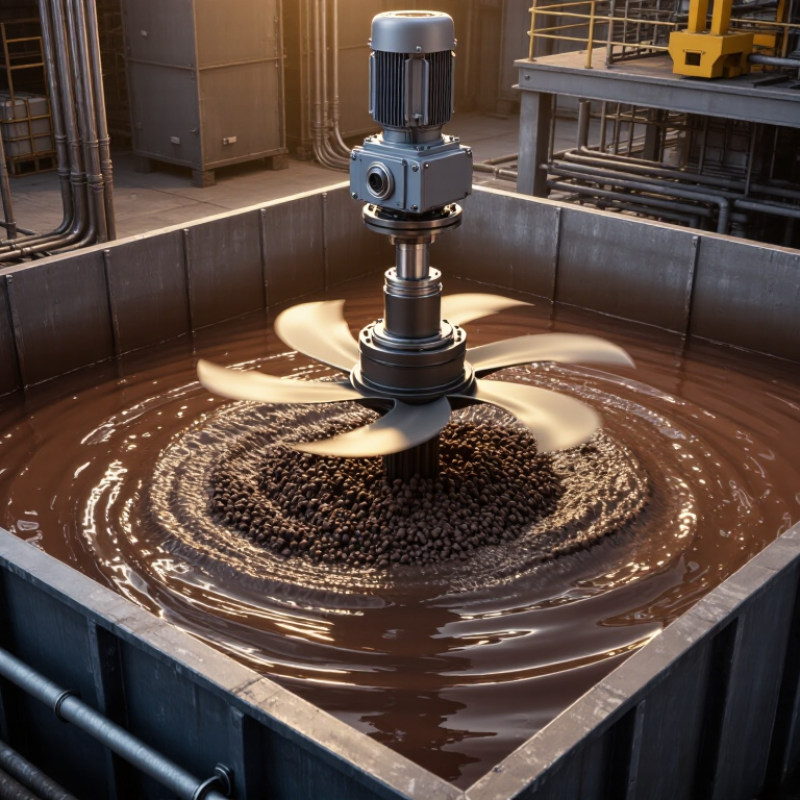
In the circulation system, a Mud Tank Agitator keeps drilling fluid moving while it waits in surface tanks. Its rotating impeller creates a current that helps barite and other weighting solids stay distributed. Without enough movement, heavier material can settle into a dense layer near the tank floor. The surface may still look calm.
That uneven mixture can affect what reaches the suction line and mud pumps. Steady agitation helps keep fluid properties more consistent as mud returns to the active system. This supports planned density, though it does not replace mud testing. The agitator does not pump fluid downhole or remove drilled cuttings; circulation pumps and solids-control equipment handle those tasks. Tank shape, impeller placement, fluid properties, and operating speed all influence mixing.
A practical check is to inspect for settled solids around the impeller and compare samples from different tank depths, following site procedures. Check the bottom. A running motor does not prove the entire tank is mixed. Dead zones can remain, and they are easy to overlook. No tank mixes perfectly. Regular checks help reveal when agitation is no longer keeping the fluid adequately uniform.
| Function or Feature | What the Agitator Does | Where It Matters in the Circulation System | Operational Benefit | Important Limitation |
|---|---|---|---|---|
| Keep solids suspended | Rotating impeller blades circulate drilling fluid in the mud tank and help keep weighting material and other solids distributed. | Mud tanks and active pits that hold fluid before it is pumped downhole. | Reduces settling and helps maintain a more consistent fluid mixture. | An agitator helps suspend solids but does not remove unwanted solids from the mud. |
| Maintain fluid uniformity | Creates tank circulation that limits concentration differences between areas of the fluid. | Between the active tank, suction area, and other connected tank compartments. | Helps provide the mud pumps with fluid of more consistent composition. | Correct tank layout and adequate circulation are also needed; an agitator cannot eliminate every dead zone. |
| Support mud-property consistency | Keeps solids and liquid phases mixed while the fluid is stored or circulated through the surface system. | At the surface, before mud is drawn into the pumps and sent into the drillstring. | Helps limit changes in density and other measured properties caused by uneven settling or mixing. | It does not replace routine mud testing or treatment by the mud system. |
| Assist with product blending | Promotes mixing as compatible additives are introduced into the tank. | During preparation or treatment of drilling fluid in a mixing or active tank. | Can help distribute additives through the fluid more evenly. | Some products require a hopper, shear device, or specific mixing procedure; an agitator alone may not be sufficient. |
| Circulate fluid within the tank | Moves fluid around the tank rather than pumping it through the wellbore. | Within surface mud tanks, as part of the fluid-handling system. | Helps keep stored mud ready for transfer to the mud pumps. | It is not a mud pump and does not provide the pressure needed to circulate mud downhole. |
| Impeller and drive arrangement | A motor and gearbox typically turn one or more impellers mounted in the tank. | Installed at selected positions to promote circulation through the tank volume. | Provides mechanical mixing suited to the tank and fluid-handling duty. | Impeller selection, speed, and placement depend on tank geometry, mud properties, and operating requirements. |
| Maintenance and safe operation | Requires inspection of the drive, gearbox, shaft, impeller, mounting, and protective guards. | During routine checks of surface mud-system equipment. | Helps maintain reliable mixing and can identify wear or damage early. | Follow site procedures and isolate power before inspection or maintenance. |
In short: A mud agitator mixes and circulates drilling fluid inside surface tanks to help limit settling and maintain a more uniform mud supply. It supports—but does not replace—the pumps, solids-control equipment, or mud-property checks in the circulation system.
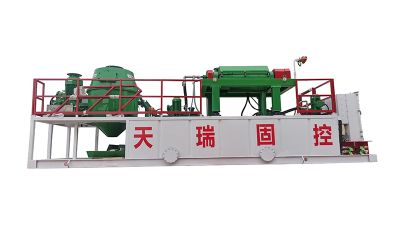
Oil-based mud is valuable in drilling operations, but the waste generated during its use can be difficult and costly to handle. A well-designed management system helps make this stream more efficient by separating drilling cuttings from the oil-based drilling fluid. Instead of treating all recovered material as waste, the system enables usable mud to be collected and returned for further use, while reducing the volume that needs to be transported or disposed of.
This approach can support lower operating costs by reducing the need for replacement drilling fluid and limiting waste-handling requirements. Recovering and reusing mud also helps maintain a more consistent supply of drilling fluid for ongoing operations. With separation and recovery steps integrated into the waste-management process, drilling teams can better control material flows, improve operational efficiency, and manage waste in a way that supports environmental requirements for oil and gas projects.
It keeps fluid moving when pumps are off or flow is low. The impeller circulates fluid and helps limit settled solids. It is not magic.
Barite is dense, so it can collect on the tank floor when circulation stops. Check corners and areas beneath supports, where solids may gather unnoticed.
A correctly positioned impeller moves fluid through the tank, not just across the surface. This helps distribute bentonite and makes samples more representative.
No. Drive ratings around 5.5–22 kW may suit different tanks, but power alone does not guarantee circulation. Tank size, fluid density, and blade position matter.
Look for settled material near bottom corners or beneath supports. The surface may look active while solids remain still below.
A watery surface sample may differ from a dense, gritty sample near the floor. That difference can affect density and viscosity readings.
Sample after circulation, and record the sampling location and conditioning time. Repeat measurements under similar conditions. Small details matter.
No. Poor premixing or unsuitable fluid properties can still cause uneven distribution. I might trust the surface swirl too much; checking the tank bottom is wiser.
A Mud Agitator keeps drilling fluid circulating and well mixed in storage tanks, helping prevent solid particles from settling and supporting consistent fluid properties. Barite is especially prone to settling because it is a dense weighting material; API Spec 13A sets a minimum specific gravity of 4.2 for barite used in drilling fluids. Proper agitation helps keep barite and bentonite distributed throughout the mud, reducing uneven concentrations that could affect fluid performance.
Agitator drives commonly range from about 5.5 to 22 kW, with the suitable rating depending on tank size, fluid characteristics, and mixing requirements. Effective results also depend on tank geometry, baffle design, and impeller placement, which together shape circulation patterns and limit stagnant zones. By maintaining a more uniform mixture, agitation helps produce representative samples for mud-property checks conducted in accordance with API RP 13B-1.