Leave Your Message
0%

Picking the right mud desilter manufacturer in China isn’t just about comparing prices or glancing at shiny product photos. You really want a supplier who can match their equipment’s performance to your specific drilling needs—not just push their biggest model. Keep an eye on things like flow rate, inlet pressure, cone count, separation size, and whether their pumps can handle your setup. These details can be the difference between fine sand staying out of your drilling fluid or ending up back in the system, causing all sorts of headaches.

When it comes to practical evaluation, don't just take their word for it. Dig into their factory experience, ask about engineering support, check their quality control measures, and see how solid their after-sales service really is. Request technical drawings, material specs, inspection reports, and performance data from jobs similar to yours. Pay close attention to cone material, cyclone wear resistance, screen quality, and vibration stability—all of these matter. Just because a manufacturer has ISO 9001 certification doesn’t mean they’ll deliver field-proven results, but it’s a good sign that their processes are organized. When possible, ask for a test video or arrange an inspection—seeing is believing.

Look for real evidence, not just empty promises.

And don’t underestimate the power of a good conversation. Can they explain pressure loss clearly? Are they quick to provide replacement parts? Do they specify response times and who’s responsible if something goes wrong? These little things often tell you more about their reliability than any brochure. Remember, no supplier is perfect. Even the top mud desilter might need tweaks after installation, especially if your mud properties change over time—that’s just part of the deal. A trustworthy partner will openly acknowledge limitations, document them, and suggest workable solutions. This guide aims to help you evaluate Chinese manufacturers based on real capabilities, documented experience, honesty in their technical info, and their ability to support you long-term.
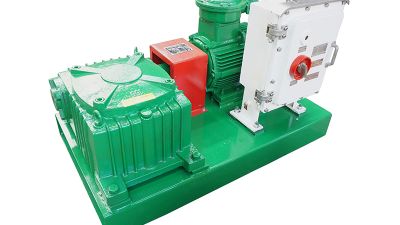
China Top Mud Desilter Manufacturers How to Choose?

Define Mud Desilters: 4-Inch Cones, 50–75 GPM Capacity, and 15–45 μm Cut Points

A mud desilter separates fine drilled solids from circulating fluid through hydrocyclone cones. In this specification range, a 4-inch cone commonly handles about 50–75 GPM, depending on pressure, fluid density, and cone design. That capacity is not universal. Always confirm whether the rating applies per cone or to the complete unit.

The 15–45 μm cut point indicates the approximate particle size removed under defined test conditions. A 15 μm target may improve fluid cleanliness, but it can reduce flow and increase wear. A 45 μm target often offers steadier processing with lower operating demand. Field engineers should check inlet pressure, typically near the manufacturer’s recommended range, rather than choosing by cone diameter alone. A pressure gauge, replaceable apex, and accessible screens make daily inspection easier.

When comparing top mud desilter manufacturers, request test data for your actual mud weight, viscosity, and solids concentration. Ask how the 4-inch cones perform with abrasive sand and changing flow rates. I have seen units meet the brochure capacity but struggle when the mud becomes thick. That matters. Review weld quality, spare-part availability, cyclone material, and documented quality controls. A short site trial can reveal vibration, poor discharge, or unexpected underflow loss before a larger purchase. Specifications guide selection, but operating evidence should decide it.

Compare Hydrocyclone Performance Using D50, Solids Loading, and 10–20 μm Targets

Choosing an Oilfield Mud Desilter requires more than comparing flow capacity. Hydrocyclone performance depends on D50, feed pressure, viscosity, and solids loading. D50 is the particle size removed at approximately 50% efficiency. A lower D50 usually indicates finer separation, but it can increase pressure demand and wear.

ISO 13501 testing principles require defined feed conditions before equipment comparisons. Published SPE solids-control studies commonly report practical desilter targets near 10–20 μm under stable drilling-fluid conditions. Field reports also show that performance can decline sharply when solids loading exceeds roughly 3–5% by volume. That number is not universal. Mud density matters.

Ask manufacturers for D50 curves, not single marketing figures. Review results at the intended flow rate, pressure, mud weight, and plastic viscosity. A unit claiming a 15 μm D50 may perform closer to 25 μm when overloaded. Check the sample ports, too. A clean collection cup provides useful evidence. Poor sampling can make good equipment appear weak. I would compare three test points: low, normal, and high solids loading. The middle result is often the most realistic, though not always the most flattering.

Verify Manufacturer Quality Through ISO 9001, API Q1, and Factory Audits

China Top Mud Desilter Manufacturers: How to Choose?

China’s top mud desilter manufacturers may look similar online, but certification evidence separates reliable suppliers from risky choices. Ask for a current ISO 9001 certificate. Check its scope, issuing body, and expiration date. The scope should cover design, production, inspection, or servicing of solids-control equipment. API Q1 adds stronger controls for quality planning, purchasing, traceability, and corrective action. Do not accept a scanned certificate without verification. A certificate alone can still mislead.

During a factory audit, inspect machining areas, assembly stations, test benches, and storage conditions. Request material certificates and batch records for hydrocyclones, manifolds, and wear parts. Check whether serial numbers remain traceable after assembly. Review calibration records for pressure gauges and testing instruments. Ask to see nonconformance reports, not only perfect inspection sheets. Real quality systems show problems and close them. However, one audit cannot reveal everything.

Tips: Compare at least three manufacturers using the same checklist. Confirm ISO 9001 and API Q1 details directly with the certification body when possible. Ask for a sample inspection plan, factory acceptance test procedure, and corrective-action example. Watch how quickly the supplier answers technical questions. Clear answers matter more than polished brochures. I once treated fast replies as proof of competence. That was a poor shortcut. A serious supplier should explain limits, test results, and design assumptions without hiding uncomfortable details.

China Top Mud Desilter Manufacturers How to Choose? - Verify Manufacturer Quality Through ISO 9001, API Q1, and Factory Audits

Evaluation Dimension What to Verify Recognized Quality Benchmark Evidence to Request Suggested Assessment Buyer Result
ISO 9001 Quality Management System Confirm that the certificate covers the actual manufacturing site and the design, production, or servicing activities related to mud-cleaning equipment. Valid ISO 9001 certification issued by an accredited certification body, with an applicable scope and current validity period. Certificate number, certification-body details, scope of certification, expiry date, and online certificate verification record. Pass / Review / Fail __________
API Spec Q1 Quality System Determine whether the manufacturer holds a current API Specification Q1 certificate applicable to the products and activities being quoted. Current API Q1 certification with a product and manufacturing scope relevant to solids-control equipment; certification should be independently verifiable. API certificate, scope statement, registered facility information, audit status, and confirmation through the official API directory where applicable. Pass / Review / Fail __________
Factory Ownership and Production Capability Verify whether the supplier operates the quoted factory and controls key processes rather than acting only as a trading company. Traceable legal entity, consistent factory address, defined production areas, and documented control of outsourced processes. Business license, factory address, production-area video or live audit, process flow chart, equipment list, and subcontractor controls. 0–10 points ____ / 10
Design and Technical Documentation Check whether the design is supported by controlled drawings, specifications, calculations, and revision management. Controlled assembly drawings, bills of materials, material specifications, design-change records, and documented approval procedures. General arrangement drawing, hydrocyclone specifications, manifold drawings, equipment datasheet, user manual, and revision history. 0–10 points ____ / 10
Hydrocyclone and Separation Performance Compare separation claims under defined operating conditions instead of relying on an isolated maximum capacity figure. Performance data should state flow rate, inlet pressure, fluid properties, solids concentration, cut-point basis, and test method. Factory test report, test-fluid description, operating pressure, particle-size distribution, recovery data, and acceptance criteria. 0–15 points ____ / 15
Material and Component Traceability Verify traceability of pressure-containing parts, wetted components, structural steel, wear parts, and purchased components. Material certificates or supplier records matched to purchase orders, incoming inspections, batch numbers, and component records. Material test certificates, incoming inspection reports, welding consumable records, component certificates, and traceability matrix. 0–10 points ____ / 10
Welding and Fabrication Controls Review welding procedures, welder qualifications, inspection stages, dimensional checks, and control of surface defects. Documented welding procedures, qualified personnel where required, inspection records, and corrective-action controls. Welding procedure documents, welder qualification records, weld inspection reports, dimensional inspection reports, and nonconformance records. 0–10 points ____ / 10
Pressure, Leak, and Functional Testing Confirm that manifolds, pumps, valves, tanks, and assembled systems are tested according to documented procedures and project requirements. Defined test pressure or operating condition, calibrated instruments, acceptance limits, signed test records, and controlled retest procedures. Pressure or leak-test procedure, calibration certificates, inspection checklist, pump test results, and final functional-test report. 0–10 points ____ / 10
Calibration and Inspection Equipment Check whether measuring and test equipment is identified, calibrated, protected, and linked to valid inspection results. Calibration records show equipment identification, calibration date, due date, traceability, and acceptance status. Calibration register, certificates for pressure gauges and electrical instruments, equipment labels, and out-of-tolerance procedure. 0–5 points ____ / 5
Factory Audit Findings Assess housekeeping, process identification, material segregation, worker competence, inspection discipline, storage, and shipment protection. No critical nonconformities; major findings have documented root-cause analysis, corrective action, responsibility, and closure dates. Audit checklist, photographic evidence, nonconformity log, corrective-action report, and follow-up verification. 0–15 points ____ / 15
Final Inspection and Documentation Package Verify that each completed unit receives a documented release inspection before packing and shipment. Final inspection confirms configuration, dimensions, labels, coating, accessories, test results, manuals, and customer-specific requirements. Signed final inspection report, nameplate record, packing list, spare-parts list, certificates, manuals, and approved drawings. 0–5 points ____ / 5
After-Sales Service and Spare Parts Evaluate response capacity for commissioning, wear-part replacement, troubleshooting, and warranty handling. Documented warranty terms, service contacts, spare-parts identification, response process, and technical support records. Warranty policy, spare-parts catalog, service procedure, troubleshooting guide, response-time commitment, and reference project documentation. 0–5 points ____ / 5
Total Quality Evaluation Score ____ / 100
Recommended decision rule: Treat ISO 9001 and API Q1 certificates as verification requirements, not automatic proof of product performance. Select a manufacturer only after certificate validation, review of objective quality records, and completion of a factory audit or equivalent independent inspection.

Assess Construction Materials, Wear Resistance, and 0.35–0.7 MPa Operating Pressure

When comparing China’s top Mud Desilter Equipment manufacturers, examine construction materials before counting hydrocyclones. API Specification 13C and ISO 13501 provide standardized methods for evaluating solids-control equipment, but they do not guarantee service life. Request material certificates for the manifold, feed chamber, and cyclone body. Stainless steel or abrasion-resistant alloy generally performs better than ordinary carbon steel in sand-heavy drilling fluids. Check wall thickness, weld quality, and internal surface finish.

Operating pressure is equally important. A practical selection range is 0.35–0.7 MPa, depending on mud density, flow rate, and cyclone diameter. At the lower limit, separation may weaken when solids loading rises. At the upper limit, pump energy and liner erosion increase. According to API RP 13C principles, test conditions should match actual fluid properties, not clean-water assumptions. Ask for pressure-drop curves, capacity data, and test records at several flow points. Small details matter: a gauge should remain visible beside the inlet, and the pressure relief path should not be obstructed.

Wear resistance needs evidence, not confident wording. ASTM G65 abrasion testing can help compare rubber, polyurethane, ceramic, and alloy liners, although laboratory results may not predict every field condition. Ceramic often resists sharp sand well, while polyurethane can absorb impact better. That trade-off deserves attention. Inspectors should check liner thickness after each campaign and record pressure changes. Some buyers overlook flange alignment and spare-liner availability. That is a costly mistake. A manufacturer with clear inspection reports, traceable materials, and realistic service limits shows stronger engineering reliability.

Evaluate Process Compatibility with Shale Shakers, Desanders, and Mud Tanks

Choosing a China-based mud desilter starts with process compatibility, not catalog capacity. API RP 13C testing guidance evaluates screen performance through cut point and conductance. Ask manufacturers for these figures under your actual mud properties, not clean-water tests. A Hydrocyclone Mud Desilter often targets particles around 15–25 microns, while desanders commonly remove larger particles near 40–80 microns. These ranges vary with pressure, viscosity, and solids loading.

The shale shaker must remove coarse cuttings before the desilter receives fluid. Otherwise, hydrocyclone cones may plug, and screen life can fall quickly. Check the shaker’s underflow layout, pump suction height, and feed pressure. A practical trial should run the same mud through the shaker, desander, desilter, and mud tanks. Measure inlet pressure, overflow clarity, underflow moisture, and tank density. Small details matter.

API RP 13C also supports comparing screen conductance and separation results between suppliers. IADC drilling-fluid guidance emphasizes monitoring rheology and low-gravity solids during circulation. Use those records when sizing cones and pumps. One field mistake is selecting a desilter by flow rate alone. It may fit the brochure but overload the mud tank. I would request a witnessed test with bentonite, weighting material, and representative drilled solids. The first choice may be wrong. That is useful evidence, not failure.

Process Compatibility Guide for Mud Desilters

Typical effective separation ranges show how a desilter should be evaluated as part of the complete solids-control system. Shale shakers remove larger drilled solids first, desanders handle medium-sized particles, and desilters target finer solids before the cleaned mud returns to the active mud tanks. Actual performance depends on cone size, operating pressure, mud properties, flow rate, screen selection, and system configuration.

Calculate Total Cost from Energy Use, Spare Cones, Liners, and 2–5-Year Maintenance

Choosing among China’s top mud desilter manufacturers requires more than comparing purchase prices. Calculate the total cost over two to five years. The IEA’s Energy Efficiency 2023 report states that electric motor systems consume nearly half of global electricity. Therefore, record motor power, operating hours, electricity tariffs, and expected load. A 15 kW unit running 5,000 hours yearly can consume 75,000 kWh before losses. Small efficiency differences become expensive.

Include spare cones, liners, screens, seals, freight, and technician time. Request a written replacement schedule from each supplier. For example, six spare cones may cost less than one emergency shipment during continuous drilling. Liners need separate attention. Abrasive solids can shorten their service life sharply. My first cost sheet missed cleaning labor and downtime. That mistake changed the lowest quotation into the highest operating cost. An Api Standard Mud Desilter should also provide traceable test records, material details, and performance data under comparable flow rates. Check whether the supplier follows relevant API specifications, rather than trusting a certificate image alone.

Tips: Build three scenarios: normal, abrasive, and heavy-use. Use measured solids loading when possible. Ask for five-year maintenance records from similar projects. Compare kWh per cubic meter processed, not motor size alone. Keep a contingency allowance for liners, bearings, and unplanned service. A low initial price can hide expensive spare-cone consumption. Recheck every assumption.

Validate Suppliers Through 24-Hour Field Trials, Barite Recovery, and Overflow Clarity

China Top Mud Desilter Manufacturers How to Choose?

Supplier claims need more than a factory tour. Require a 24-hour field trial using your actual drilling fluid, not clean water. Record flow rate, inlet pressure, cone performance, mud weight, and screen condition every two hours.

API RP 13C provides a recognized framework for solids-control screen testing, but it does not certify complete desilter performance. That limitation matters.

Track barite recovery through a simple mass balance. Measure feed density, underflow density, and recovered weighting material at fixed intervals.

A 2023 SPE technical paper reported that solids-control efficiency can change sharply with fluid rheology and flow conditions. Therefore, a single laboratory sample may overstate performance.

A practical trial should compare recovered barite against baseline mud consumption, while checking whether useful weighting material leaves with the discard.

Inspect the overflow in a clear sample cylinder. After 30 minutes, record the sediment height, visible grit, and upper-fluid clarity.

Do not accept “clean” as a vague description. Set measurable limits before testing, such as minimal visible coarse solids and stable density variation. These are project criteria, not universal standards.

The IADC Drilling Manual emphasizes monitoring equipment under actual operating conditions, which supports this approach. Still, a 24-hour test can miss seasonal water changes or worn cones.

That is the uncomfortable part. Ask the manufacturer to explain failures, not only successful samples.

Mud Agitators for Solids Control Systems: Design, Applications, Benefits, and Selection Guide

Mud agitators are essential equipment in solids control systems because they keep drilling fluids uniform while preventing barite, drilled cuttings, and other solids from settling in tanks. Industry guidance, including API RP 13C principles and SPE technical studies, emphasizes consistent fluid properties as a foundation for reliable filtration, centrifuging, and density control. Proper agitation can reduce dead zones, support stable rheology, and help processing equipment operate closer to its designed capacity.

For drilling mud tanks, a 3–22 kW agitator range covers many field applications, from compact active tanks to larger reserve or mixing compartments. Low-energy motors, reduced operating noise, and efficient torque transmission are important selection factors because agitators may run continuously during circulation and treatment. Coupling-type units are suitable where flexible installation and service access are preferred, while direct-drive designs offer a compact arrangement with fewer transmission components.

The shaft and impeller should receive galvanizing treatment to improve resistance to moisture and drilling-fluid exposure. Gearbox selection also affects torque, maintenance, and operating efficiency: worm-gear structures provide a practical, economical configuration, whereas helical-gear structures generally offer smoother transmission and higher mechanical efficiency. Buyers should match impeller diameter, rotational speed, tank geometry, fluid density, and solids concentration rather than selecting motor power alone.

FAQS

How should I calculate a desilter’s total cost?

Include purchase price, electricity, spare parts, freight, labor, and downtime. Review costs over two to five years. A cheap quotation may become expensive later.

Which energy details should I record?

Record motor power, annual operating hours, electricity tariffs, and expected load. A 15 kW motor running 5,000 hours uses about 75,000 kWh before losses. Small efficiency differences can matter.

Which replacement parts require special attention?

Track cones, liners, screens, seals, bearings, and related service time. Abrasive solids may shorten liner life sharply. Ask for a written replacement schedule.

How many spare cones should be kept onsite?

Use expected wear, drilling hours, and delivery time to set the quantity. Six spare cones may cost less than one emergency shipment. The correct number depends on your project.

How can suppliers be compared fairly?

Compare energy use per cubic meter processed, not motor size alone. Request material details, test records, and performance data at comparable flow rates. Certificate images are not enough.

What cost scenarios should be included?

Build normal, abrasive, and heavy-use scenarios. Include contingency money for liners, bearings, and unplanned service. Measured solids loading improves the estimate.

How should a supplier’s field performance be tested?

Require a 24-hour trial with your actual drilling fluid, not clean water. Record flow rate, inlet pressure, mud weight, cone performance, and screen condition. Check these details every two hours.

How can barite recovery be measured?

Create a simple mass balance using feed density, underflow density, and recovered weighting material. Compare recovery with normal mud consumption. Useful material may leave with discarded solids.

How should overflow clarity be checked?

Collect overflow in a clear sample cylinder. After 30 minutes, record sediment height, visible grit, and fluid clarity. “Clean” is too vague.

What limitations should be considered during testing?

A 24-hour trial may miss seasonal water changes or worn cones. Ask suppliers to explain failures, not only successful samples. My first cost sheet missed cleaning labor and downtime. That changed everything.

Conclusion

Choosing the right Mud Desilter requires more than comparing advertised flow rates. Start by confirming the equipment’s core specifications, including four-inch hydrocyclone cones, a typical capacity of 50–75 GPM, and a target separation range of approximately 15–45 μm. Compare performance through D50 values, solids-loading tolerance, and the ability to meet 10–20 μm separation goals under actual operating conditions. Manufacturer quality should be verified through ISO 9001, API Q1 where applicable, documented factory audits, and clear inspection records.

Also evaluate cone and liner materials, wear resistance, and suitability for operating pressures between 0.35 and 0.7 MPa. The unit should integrate smoothly with shale shakers, desanders, and mud tanks without disrupting the treatment process. A realistic cost assessment must include energy consumption, replacement cones, liners, and maintenance over two to five years. Before purchase, conduct a 24-hour field trial to confirm stable operation, barite recovery, overflow clarity, and long-term separation consistency.


Ella

Ella

Ella is a dedicated marketing professional at a leading manufacturer specializing in drilling fluids solids control and drilling waste management equipment. With a profound understanding of the company’s innovative products and services, she plays a crucial role in communicating the value and......